Common Challenges
- Feeling something on the skin does not necessarily mean an ingredient is working.
- Research potential ≠ ideal transdermal distribution


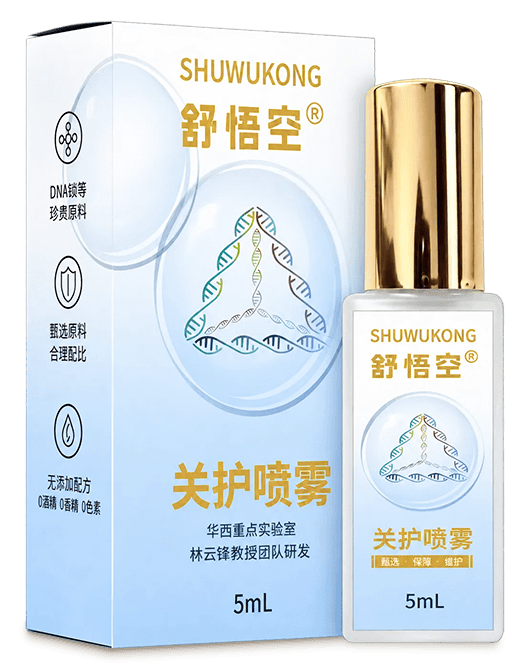
Developed by Professor Yunfeng Lin’s team at aWest China key laboratory at Sichuan University
4th-Generation tFNA for Rapid Transdermal Delivery Targeted EverydayCare to Help Ease Shoulder, Neck, Lower-Back, Knee and Ankle Discomfort
 When Your Body Could Use Everyday Care

Shoulder and neck tension; lower-back fatigue

Holding the same position for long periods and localized discomfort

Sore muscles and heavy-feeling limbs
Muscle tension from bending or standing for long periods
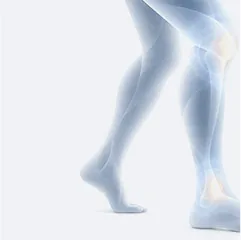
Soreness and tightness in the knees and ankles
 The Real Challenge for Topical Products
Human skin acts like a protective wallmade of corneocytes and lipids. While it helps blockexternal substances and reduce water loss, it also formsa barrier that topical materials struggle to cross.

The Shuwukong Approach
A study using mouse skin and human skin models found that tetrahedral framework nucleic acids penetrated to a depth of 350 μm while retaining their structural integrity.
A cell-model study found that unloaded tetrahedral framework nucleic acids alone reduced levels of multiple inflammatory mediators and ROS, showing antioxidant activity.
A study observed that tetrahedral framework nucleic acids are not merely inert structures: they can be taken up by cells and are associated with oxidative-stress regulation, autophagy and noncanonical cGAS–STING signaling.
Scientific Foundation
What Makes Shuwukong Different
From the outset, Shuwukong's development was not limited to asking which ingredients should go into the formula. It began with a more fundamental question: can structural and size design give the core material a distribution profile better suited to topical use?
|
Shuwukong
|
Common Care Approaches | |
|---|---|---|
| Primary Focus | Crossing the skin barrier while preserving material structure |
Emphasis on sensations felt at the skin surface |
| Technical Focus | Material configuration, size and stability |
The overall formulation system |
| Ingredient Approach | Sodium DNA |
Typically a blend of multiple ingredients |
| Immediate Feel | Light and quick-drying, with no greasy or sticky feel |
Cooling or warming sensations, botanical scents or a heavy balm texture |
Advanced Technology, Simple Application
The fine mist forms an even layer, supporting the core material’s diffusion through the skin without rubbing.
A lightweight, water-like base with no alcohol, fragrance or colorants for a fresh, breathable feel.
The compact 5 mL bottle is easy to carry and can be applied as needed across the entire target area.
Make sure the skin in the target area is clean and dry.
Hold the nozzle about 10–20 cm from the skin and apply 3–5 sprays each time.
Let it absorb naturally without rubbing, and do not cover the area with clothing immediately after spraying.
FAQ
Shuwukong is a daily-use consumer product intended for localized body care. It is neither a drug nor a medical device and is not intended to prevent, diagnose or treat disease.
Seek prompt medical attention if pain is persistent or pronounced, movement is limited, redness, swelling or injury occurs, or discomfort continues to worsen.
A tetrahedral framework nucleic acid (tFNA) is an advanced DNA nanomaterial. Through deliberate sequence design, researchers enable four single-stranded DNA molecules to self-assemble by complementary base pairing, much like “DNA origami,” into a stable three-dimensional tetrahedral, pyramid-like structure. A typical tFNA measures about 6–10 nanometers, far smaller than a human cell.
Its well-defined nanoscale dimensions and three-dimensional structure support cellular uptake and tissue penetration. tFNA also offers good biocompatibility, resistance to nuclease degradation, structural stability, design and functionalization flexibility, and efficient self-assembly. These structural properties make tFNA an advanced material platform for research and development in biomedicine, drug delivery and everyday health products.
Sodium DNA is the sodium-salt form of deoxyribonucleic acid. It is included in China's Inventory of Existing Cosmetic Ingredients and is used as the standard cosmetic-ingredient name for product notification and ingredient labeling. The term primarily describes the material's chemical composition and salt form; it does not specify the DNA sequence, strand length or spatial structure.
A tetrahedral framework nucleic acid (tFNA) is a type of DNA nanostructure. It is formed when four specifically designed single-stranded DNA molecules self-assemble through complementary base pairing into a stable three-dimensional tetrahedron. The tetrahedral form results from noncovalent self-assembly among the DNA strands and does not alter the basic chemical composition of the DNA backbone. Therefore, when the DNA oligonucleotides that make up a tFNA are present as sodium salts, their composition may fall under the ingredient name SODIUM DNA, while “tFNA” describes the specific spatial organization of those DNA molecules.
In other words, Sodium DNA and tFNA refer to different levels of nomenclature: the former primarily describes chemical composition and salt form, while the latter describes the spatial structure produced when sequence-designed DNA molecules self-assemble.
In Shuwukong's product notification and ingredient labeling, this material is identified by the standard ingredient name “SODIUM DNA.” In technical materials, “tFNA” describes the tetrahedral framework structure formed by the DNA material.
“Sodium DNA” and “tFNA” therefore describe the same material at two different levels: the cosmetic ingredient name and the material’s structural form. The former answers, “What name is used for this material in the cosmetic ingredient system?” The latter answers, “What spatial structure do these DNA molecules form?” Listing “SODIUM DNA” in the ingredient list is therefore consistent with using “tFNA” in technical materials.
“Fourth-generation” refers to the material design developed through repeated screening and refinement by the research team across DNA sequence design, tetrahedron size, spatial configuration, transdermal distribution, product compatibility and structural stability. It does not mean that the product packaging has been updated four times.
Each Shuwukong bottle contains 5 mL and provides approximately 80–100 full sprays. The actual number of uses will vary with the amount sprayed each time and the method of application.
Shuwukong can achieve transdermal delivery within minutes, helping provide a sense of comfort quickly.
For external use only. Do not ingest. Avoid contact with the eyes, mouth and other mucous membranes. Do not spray on wounds, broken skin, or irritated or otherwise abnormal skin.
If the product gets into the eyes, rinse immediately with clean water. Do not use if you are allergic to any ingredient in the product.
First-time users and people with sensitive skin may wish to perform a patch test on a small area. If persistent redness, itching, burning, stinging or other pronounced discomfort occurs, stop use immediately and rinse the area thoroughly. Consult a qualified professional if necessary.
Keep out of reach of children. Use with caution on infants and young children.
Shuwukong's core material has a specific three-dimensional structure. Refrigerated storage and temperature-controlled shipping help keep the product stable.
After receiving the product, keep it sealed and store it at 2–8°C. Follow the instructions on the product packaging for specific guidance.